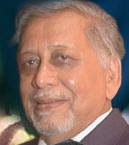
Ranjan Das, Managing Director of SAP INDIA LTD is no more ! He was 42 years old and considered, by many Corporate Gurus, as the ‘Wizard of the Business Management”. His passing away has created a void in the world of international business. The obituary of Ranjan appeared in National and International electronic & print media all over the world including The WALL Street Journal to Economic Times to quote a few. Assam remained mute spectator to this sad incident, perhaps, in agony; no Assamese knew how to react! He succumbed to heart attack soon after the morning work up on 21st October, at his residence in Bombay.
Ranjan was an energetic boy from Guwahati, Assam, with a determined dream in his eyes. He was born and raised initially at Guwahati by his middle class parent from Uzanbazar. His father was an Assistant Director of Industries. Ranjan had his initial schooling in Guwahati and later studied in Indore and Delhi. He graduated from MIT and did his MBA from Harvard Business School during his mid twenties, all on scholarship from both the well-known university itself.
When he died on October 21st he was only 42 years old. Ranjan’s meteoric rise was a story of success of will power, of Assamese middle class, over money. He always dreamt big. He was restless to achieve his dream. Rajan was selected as the Managing Director and CEO of SAP India Ltd., an international company, promoted by five Germans working once for IBM. Today IBM is one of their licensee in ERM business. Ranjan joined the group eight years ago as its Senior vice president when he was only 34 years old. He had a meteoric rise and within four years he headed his department in USA. On 2007 he was selected to head the organization in INDIA when he was only 39 years old.. A very few Indian has been able to achieve such a distinction in international arena of high business. SAP is the world’s greatest ERP company. Today, IBM, Price water house, TCS, WIPRO even Infosys are their licensees. HCL has joined the bandwagon too.
Ranjan came to India in JULY 2007 and created a niche in the business world. It is an accepted fact that SAP became one of the greatest success stories of Asia during last two years of his leadership. He could defy recession. WHEN MANY COMPANIES were STRUGGLING HARD DURING THIS PERIOD HE took SAP to a great height. Every business head were admitting superb business sense of Ranjan. Ranjan was a fitness freak too. He used to run five miles a day, used work up at gymnasium every morning to keep him fit. He was a fit person alright. Last year he participated in a cross country race in Chennai. Alas, his fitness manias brought him down and he died just after arriving home from gymnasium down below of his apartment. Hearing the news, his mother, at Guwahati, was stunned and devastated in such a way that she could not even manage to visit Bombay to attend the last right of her eldest son.
With his huge success in India, Ranjan was considered to be the next CEO of world wide SAP. If he would have survived the heart attack he would have been the first world leader of business from Assam.
Alas! Ranjan’s death was a misfortune for ASSAM nay to Indian middle class rise. He would have taken professional skill to a rarefied height of international success.
I met Ranjan way back in the later part of eighty when he came to see me seeking my help when his American visa was rejected due to miss understanding of a clause in his i-20. Ron Lorton was then the Console General in Kolkata. During our discussion the miss interpretation was cleared and visa was granted to Ranjan. The MIT offered Ranjan full fees to pursue his studies leading to bachelor degree in computer science. Ranjan studied for full four years and came out with flying colours. After a brief work in Oracle he tried and obtained a scholarship from HARVARD for MBA. He came out with flying co lour and founded a company. He named it “Pataki net work.com.” His dream was not fulfilled. He joined back Oracle. Achieved greater success. German Bosses of SAP were observing him. They gave him an offer which he could not refuse for he wanted to fulfill fill his dream. Ranjan always felt that a Middle class Assamese is not inferior to anyone in the world. He wanted to prove it by his hard and dedicated work. He alwys felt to be a topper, is not important but sincerity of purpose, devotion and hard work are vital for success in life or in death. He strived to achieve that dream. He was successful too. He felt four hours sleep is good enough for a young man. HE hardly slept, mostly dreamt, worked and exercised. Perhaps HE PROVED HIMSELF WRONG. He needed more sleep to ward off his stress.
Ranjan has remained a symbol of empowerment to new generation. From a primary and high school of Guwahti, secondary school of indore he showed how a middle class boy can get admission in MIT and HARVARD without having a penny of his own. In his entire dream and dedicated work it was his lovely wife RUPA contributed most. It was Rupa who took control of entire home affairs raising two boys and agreed to relocate from Bay area, for the sake of his dream, to India. Behind every successful man there remains a lady. Rupa fulfilled her responsibilities with pleasure. She was a journalist herself. She will miss him most.
Ranjan was a great person who loved his state most, named his company in USA with Assamese name. His dream to make ASSAM known for professional leadership remained unfulfilled. Hope someone from Assam will fulfill his dream in future! Once in Boston, accepting his hospitality, I asked him ‘who inspired you most to dream great?’ Without batting an eyelid he replied “It was my Mother who inspired me to dream and it was Rupa who tried to transform it to reality”. Today, Ranjan is no more, but his legacy continues to inspire young boys from Assam to dream… Today we salute to Ranjan’ s indomitable spirit. Let his soul rest in peace.
---------------------------------------------
Tuesday, October 27, 2009

Thursday, September 24, 2009
Whether buying of gold makes sense now?
During last few months I am flooded with a question from our readers whether should they buy Gold or Gold ETF. I am really surprised to find that so many persons have been rushing to buy Gold now a days. Gold have been favourite of human being from time immemorial. In fact Indian buys and holds maximum quantity of gold. Indian uses gold in ornaments during the wedding. Fashionable persons were gold jeweleries to make style statement. Yet most of the people uses it as the security for life during the financial crisis.
The birth of GOLD ETF emerged out of this sense of secuirty for life. The orld monetary system revolves round the GOLD standard. Nobdoy knows actually how many tons of Gold are kept in the FORTKNOX of USA but i the belief that works out like miracle. Entire monetary system revolve around the Gold. Recently IMF had recommended that countries of the world can sell Gold to combate recession. It is expected that GOLD price may come down when actual sell of Gold takes place. But according to some economist in the next fifteen years the value of Gold would go up many fold. In that pre supposition value of Gold is going up slowly from now onwards. So whether people should buy Gold or GOLD ETF ?
According to me if someone wants to make jeweleary for ewedding then it would be prudent to buy Gold. But it people wants to make an investment out of Gold then it is better to buy Gold ETF. What is GOLD ETF? Who started it? Is is worth while to buy ETF rather the Gold Metal? These are the questions need to be answaeered now.
Exchange traded funds (ETFs)were first introduced on the Toronto, Canada, Stock Exchange around the early '90s. They were then introduced in to the US and other markets during the 90s. in India Gold ETF was started during Twentyfirst century. What is the meaning of GOLD ETF fund?
A simplified definition would be: An exchange traded fund has funds and stocks in one product and trade is made on the particular fund. Prior to ETFs, stocks and funds, were traditionally kept separate to reflect liquidity issues.
The purpose of an ETF is to be able to invest in the growth of an industry or even commodity that was not easily available to the market prior to ETFs.There are certain inherant benefit of ETF. Those are:flexibility in the timing of purchases and sales. No taxes involves in ETF if investment is held for more than a year. However there are cetain disadvantage that there is no control of thebuyers of ETF over the activities or the content of the ETF. There is no gurantee that ETF buyer would own real Gold metal.The i9nvestor cannot redeem gold or take delivery of the gold. They can ofcourse get Cash equivalent to value of market based gold. To buy ETF there is hidden cost broker but that is minimal . It is even lowers than MFund cost. The unit reflect the price of actual price of London Bullion market. The greatst advantage is ETF is safe and there no problem of storage and cannot be sold any day when market is open.Once you have a brokerage account you can buy Gold ETF by placing an order like a normal stock order to buy listed Gold ETF. Most of the ETF are listed only on NSE. Unfortunately, BSE does not have any Gold ETF listed on it.
Gold EFT are fast becoming a rage in India. One reason attributed to its popularity could be its stellar performance in a relatively subdued market conditions.
It is a wise decision to allocate just a small portion of your portfolio to gold ETFs. Gold ETFs should not be looked at as a mainstream investment. Currently, there are six gold ETFs operating in the market and they are all alike. They are structured in a way that all generate same return. The NAV of all funds should be similar as per the market price of the gold metal .All ETF funds charge one percent expense. So any Gold ETF is virtually cost same and returns are also same.
When first introduced in India, many were skeptical about its relevance and suitability in Indian markets, however increasing volumes and new scheme launches(Quantum, SBI) indicate its growing acceptance in a naive market like India. It is a complex financial instrument. It involves many different entities apart from usual fund managers who manage the scheme. However, its has its own limitations since it is listed on exchanges.
Many people are unaware of ways to buy a GOLD ETF.
You need a Demat account along with broker who is a member of NSE to buy a Gold ETF. How much investment a persons should make in Gold or Gold ETF?
Any investopr should not invest al their disposable income in one basket. The money to be invested should be distributed. A persons of forty years age as the thumb rule goes should invest 60% in equity 20% in Gold ETF and 20% in Debt fund or FD( including PPF and bank saving acount). Investors some time make mistake of high investment in Gold ETF as they find when Dollar value goes down Gold Value goes up. But experience says nothing provide better return in long run than (1) work of art,(2) equity,(3) house and then only(4) Gold or Gold ETF. The investor should have gold ETF in their folio but not in preference to equity,and housing . The Gold ETF is good for creation of Wealth butnot for running their family expenses.
To hedge against Financial Collapse buying physical Gold is good if you have secured place to store.In a situation of great financial crisis GOLD ETF and share of Gold mining comapnies would never help . What should be done now?
Buy Gold or Gold ETF on DIP( not share of manufacturing comoanies) and keep it for for long term. But beaware gold should be a minor part of your portfolio and not the whole of your portfolio.
------------------------------------------------------------------------
The birth of GOLD ETF emerged out of this sense of secuirty for life. The orld monetary system revolves round the GOLD standard. Nobdoy knows actually how many tons of Gold are kept in the FORTKNOX of USA but i the belief that works out like miracle. Entire monetary system revolve around the Gold. Recently IMF had recommended that countries of the world can sell Gold to combate recession. It is expected that GOLD price may come down when actual sell of Gold takes place. But according to some economist in the next fifteen years the value of Gold would go up many fold. In that pre supposition value of Gold is going up slowly from now onwards. So whether people should buy Gold or GOLD ETF ?
According to me if someone wants to make jeweleary for ewedding then it would be prudent to buy Gold. But it people wants to make an investment out of Gold then it is better to buy Gold ETF. What is GOLD ETF? Who started it? Is is worth while to buy ETF rather the Gold Metal? These are the questions need to be answaeered now.
Exchange traded funds (ETFs)were first introduced on the Toronto, Canada, Stock Exchange around the early '90s. They were then introduced in to the US and other markets during the 90s. in India Gold ETF was started during Twentyfirst century. What is the meaning of GOLD ETF fund?
A simplified definition would be: An exchange traded fund has funds and stocks in one product and trade is made on the particular fund. Prior to ETFs, stocks and funds, were traditionally kept separate to reflect liquidity issues.
The purpose of an ETF is to be able to invest in the growth of an industry or even commodity that was not easily available to the market prior to ETFs.There are certain inherant benefit of ETF. Those are:flexibility in the timing of purchases and sales. No taxes involves in ETF if investment is held for more than a year. However there are cetain disadvantage that there is no control of thebuyers of ETF over the activities or the content of the ETF. There is no gurantee that ETF buyer would own real Gold metal.The i9nvestor cannot redeem gold or take delivery of the gold. They can ofcourse get Cash equivalent to value of market based gold. To buy ETF there is hidden cost broker but that is minimal . It is even lowers than MFund cost. The unit reflect the price of actual price of London Bullion market. The greatst advantage is ETF is safe and there no problem of storage and cannot be sold any day when market is open.Once you have a brokerage account you can buy Gold ETF by placing an order like a normal stock order to buy listed Gold ETF. Most of the ETF are listed only on NSE. Unfortunately, BSE does not have any Gold ETF listed on it.
Gold EFT are fast becoming a rage in India. One reason attributed to its popularity could be its stellar performance in a relatively subdued market conditions.
It is a wise decision to allocate just a small portion of your portfolio to gold ETFs. Gold ETFs should not be looked at as a mainstream investment. Currently, there are six gold ETFs operating in the market and they are all alike. They are structured in a way that all generate same return. The NAV of all funds should be similar as per the market price of the gold metal .All ETF funds charge one percent expense. So any Gold ETF is virtually cost same and returns are also same.
When first introduced in India, many were skeptical about its relevance and suitability in Indian markets, however increasing volumes and new scheme launches(Quantum, SBI) indicate its growing acceptance in a naive market like India. It is a complex financial instrument. It involves many different entities apart from usual fund managers who manage the scheme. However, its has its own limitations since it is listed on exchanges.
Many people are unaware of ways to buy a GOLD ETF.
You need a Demat account along with broker who is a member of NSE to buy a Gold ETF. How much investment a persons should make in Gold or Gold ETF?
Any investopr should not invest al their disposable income in one basket. The money to be invested should be distributed. A persons of forty years age as the thumb rule goes should invest 60% in equity 20% in Gold ETF and 20% in Debt fund or FD( including PPF and bank saving acount). Investors some time make mistake of high investment in Gold ETF as they find when Dollar value goes down Gold Value goes up. But experience says nothing provide better return in long run than (1) work of art,(2) equity,(3) house and then only(4) Gold or Gold ETF. The investor should have gold ETF in their folio but not in preference to equity,and housing . The Gold ETF is good for creation of Wealth butnot for running their family expenses.
To hedge against Financial Collapse buying physical Gold is good if you have secured place to store.In a situation of great financial crisis GOLD ETF and share of Gold mining comapnies would never help . What should be done now?
Buy Gold or Gold ETF on DIP( not share of manufacturing comoanies) and keep it for for long term. But beaware gold should be a minor part of your portfolio and not the whole of your portfolio.
------------------------------------------------------------------------
THE IMPACT OF DIRECT TAX CODE ON COMMON PEOPLE
The Finance Minister recently announced the proposed Direct Tax Code effective April 2011. The code aims at a comprehensive reform in the sphere of personal and corporate taxation. We would however discuss the impact of the code on common people. To safe guard the interest of business, industry and workmen there are number of chambers of commerce and Trade Unions but for common self employed people and retired people there are none. The Code is open for Public discourse hence it should be debated, discussed and recommendations need to be sent to finance Ministry.
There is a great difference between" Code" and the "ACT". The government is trying to bring in Direct Tax Code" instead of present system of "Tax under Finance Act".
.The Code would be permanent affairs like "Cr P C" or "I PC". Once tax act is converted into a code it would generally not be necessary to introduce changes every year along with budget. This is a reform which the government wants to bring in for the good of the people. The code has proposed no change in the exemption limit of the personal tax. It remains 1,60000 for men,1,90,000 for women and 2,40,000 for senior citizen. Yet percentage of taxation has been reduced up to income of Rs.Ten lakh.
Prima facie, the tax liability will reduce significantly as the draft code proposes to tax incomes up to Rs 10 lakh at 10%, that between Rs 10 lakh and Rs 25 lakh at 20% and sum in excess of that at 30%. Now people pay 10% tax only if his income is less than Rs Three lakh. A person drawing Rs 10 lakh now pays Rs 2.11 lakh as tax. If Code is implemented he would pay tax amounting to Rs 84,000/- only. Is it not really good?
But all deduction now under 80 c will vanish as it is available now except for a few like new pension schemes, LIC etc! This means death nails on small saving schemes. However deduction under 80 C will be enhanced from Rs one lakh to Three lakh. This allowance would surely help generation next. But the exemption on retirement benefits would vanish. The retirement savings will become taxable on withdrawal, as the draft code has proposed to usher in exempt-exempt-tax (EET) regime. The PPF and PF will loose all its glamour and tax benefit.
For younger Home owner there is a bad news too, the deduction of Rs 1.5 lakh allowed on interest paid on home loans appears set to be scrapped. There is no mention of such a deduction being allowed in the draft code. Young people will not get tax benefit.
On implementation of the code all perks would considered part of the gross salary for the purpose of taxation. The impact of that on tax liability of an individual will be known only when the rules are prescribed by the income-tax department at a later date.
But there would be equity in the tax system both vertically and horizontally across all sectors.. The tax treatment of the perks enjoyed by the government employee and the private sector employee will be the same. Till now government sector was in advantage!
It has also proposed that benefits such as gratuity payment made to employees on change of jobs will be allowed tax exemption only if it is invested in a retirement fund.
The most significant reform would be to bring in the EET regime for all approved provident funds, approved superannuation funds, life insurance and New Pension System trust from April 1, 2011 . The PF and PPF were under EEE system now. This benefit will vanish. The amount would be taxed on the year of withdrawal. This would hurt middle class and specially retired lot.
However, the proposed code provides that the withdrawal of any accumulated balance as on March 31, 2011 , from the specified instruments such as PPF will not be subject to tax. The senior citizen should not withdraw amount in a hurry to save tax. Because, where ever they invest the interest would be taxed. The money in PPF should be kept there itself, if possible, as the interest earned would be exempted from tax. When ever emergent requirement occurs then only it should be taken out after paying tax .In that event tax incidence would be much lower. Of course, the rollover from one exempt fund to another fund will not be subject to tax. This means from PF or PPF you can transfer it to NSC and NPS without attracting tax...
The code has proposed to continue with other deductions such as medical insurance premium, medical treatment or maintenance of disabled dependent, treatment for specified diseases for self and dependents, for the handicapped, interest on loan taken for higher education, rent paid for residence, donations to certain non-profit organisations and specified institutions and tuition fees for children.
The long term capital gain tax on equity based instrument was exempt from Taxes till now. But if code is approved it would be taxed like short term capital gains. This would affect the sentiments of investors. Now mutual fund investor would prefer to invest in dividend mode for the dividend would remain exempt from tax.
It appeared that for middle class two things would adversely effect. The taxation on withdrawal of PPF and PF and withdrawal of long term capital gains tax. The code was released for Public response. It would not be wise to sleep over it. Posterity would blame if present generation do not participate in such reform process for common people
-----------------------------------
There is a great difference between" Code" and the "ACT". The government is trying to bring in Direct Tax Code" instead of present system of "Tax under Finance Act".
.The Code would be permanent affairs like "Cr P C" or "I PC". Once tax act is converted into a code it would generally not be necessary to introduce changes every year along with budget. This is a reform which the government wants to bring in for the good of the people. The code has proposed no change in the exemption limit of the personal tax. It remains 1,60000 for men,1,90,000 for women and 2,40,000 for senior citizen. Yet percentage of taxation has been reduced up to income of Rs.Ten lakh.
Prima facie, the tax liability will reduce significantly as the draft code proposes to tax incomes up to Rs 10 lakh at 10%, that between Rs 10 lakh and Rs 25 lakh at 20% and sum in excess of that at 30%. Now people pay 10% tax only if his income is less than Rs Three lakh. A person drawing Rs 10 lakh now pays Rs 2.11 lakh as tax. If Code is implemented he would pay tax amounting to Rs 84,000/- only. Is it not really good?
But all deduction now under 80 c will vanish as it is available now except for a few like new pension schemes, LIC etc! This means death nails on small saving schemes. However deduction under 80 C will be enhanced from Rs one lakh to Three lakh. This allowance would surely help generation next. But the exemption on retirement benefits would vanish. The retirement savings will become taxable on withdrawal, as the draft code has proposed to usher in exempt-exempt-tax (EET) regime. The PPF and PF will loose all its glamour and tax benefit.
For younger Home owner there is a bad news too, the deduction of Rs 1.5 lakh allowed on interest paid on home loans appears set to be scrapped. There is no mention of such a deduction being allowed in the draft code. Young people will not get tax benefit.
On implementation of the code all perks would considered part of the gross salary for the purpose of taxation. The impact of that on tax liability of an individual will be known only when the rules are prescribed by the income-tax department at a later date.
But there would be equity in the tax system both vertically and horizontally across all sectors.. The tax treatment of the perks enjoyed by the government employee and the private sector employee will be the same. Till now government sector was in advantage!
It has also proposed that benefits such as gratuity payment made to employees on change of jobs will be allowed tax exemption only if it is invested in a retirement fund.
The most significant reform would be to bring in the EET regime for all approved provident funds, approved superannuation funds, life insurance and New Pension System trust from April 1, 2011 . The PF and PPF were under EEE system now. This benefit will vanish. The amount would be taxed on the year of withdrawal. This would hurt middle class and specially retired lot.
However, the proposed code provides that the withdrawal of any accumulated balance as on March 31, 2011 , from the specified instruments such as PPF will not be subject to tax. The senior citizen should not withdraw amount in a hurry to save tax. Because, where ever they invest the interest would be taxed. The money in PPF should be kept there itself, if possible, as the interest earned would be exempted from tax. When ever emergent requirement occurs then only it should be taken out after paying tax .In that event tax incidence would be much lower. Of course, the rollover from one exempt fund to another fund will not be subject to tax. This means from PF or PPF you can transfer it to NSC and NPS without attracting tax...
The code has proposed to continue with other deductions such as medical insurance premium, medical treatment or maintenance of disabled dependent, treatment for specified diseases for self and dependents, for the handicapped, interest on loan taken for higher education, rent paid for residence, donations to certain non-profit organisations and specified institutions and tuition fees for children.
The long term capital gain tax on equity based instrument was exempt from Taxes till now. But if code is approved it would be taxed like short term capital gains. This would affect the sentiments of investors. Now mutual fund investor would prefer to invest in dividend mode for the dividend would remain exempt from tax.
It appeared that for middle class two things would adversely effect. The taxation on withdrawal of PPF and PF and withdrawal of long term capital gains tax. The code was released for Public response. It would not be wise to sleep over it. Posterity would blame if present generation do not participate in such reform process for common people
-----------------------------------
Monday, September 7, 2009
RESEARCH ON DIVERSE APPLICATION MAY BOOST TEA TRADE
Tea as a drink has a wide acceptance. From Queen of England to President of America tea is a welcome drink. Similarly homeless of Britain to Indian residents of below poverty line also love their daily cup of tea. But now world has experienced a different usage of tea. This use is for various product of medicine and health therapy .
Tea is being lately used for colouring of fabric also. Due to antioxidant quality, tea is being used in shampoo, skin care products and even in shaving leather. For the first time I have found shaving leather having tea as an ingredient . This is available in boutique Bath and shower stores. The most value added tea product, however, is now decaf tea. It has much higher value comparative to traditional tea as a drink.This has given rise to a specialised market for tea leaf and tea bush too. In its new application tea formulations are used as health product and in cosmetic application . In these new applications ,more than the tea leaf, tea bushes, branches and trunk of the tree are used generally. A different kind of tree, akin to our tea plant, but are planted and grown much taller mostly in similar climatic zone, of sub Sahara , China and in Australia for extraction of oil.
These plants are akin to our tea plant but grown much taller and even known as Tea Tree . After an extensive research it was found that oil extracted from these tea bushes and trees have produced Tea oil . These oil have found use now in cosmetic products. This is high time for our scientific laboratory to experiment whether tea bushes of Assam could also produce similar oil or not. It is understood that in South India and in China a few entrepreneurs have tried to develop tea oil from the fifty years old bushes also Just before uprooting.
Recently it was established that Tea tree oil is an effective antibiotic and it can help human being to cure skin problems too like acne,herpes, sun burns, blisters etc. According to the recent studies it was found that tea tree oil is also beneficial in curing sickness like cold, cough, soar throat, respiratory problems etc. It strengthens human body with an awesome immunity. And so patient can fight in a perfect way with flu like condition. Till recently there were not much diverse use of Tea. Only research revealed that tribal population used it for medicinal value.
Diverse use of tea would be very helpful for young Assamese tea planters if research could be carried out by our tea laboratories. As the time progress the cultivation of tea alone would not be very profitable for cost of production of tea would go up every day. As the time has progressed due to bad weather condition, cost of fertilizer and increase in human and administrative cost have gone up. If the cost of production continues to go up every year then, It may not possible to profitably run the gardens by most of the planters.
Now a days tea is facing competition not only from cold drinks and natural juices but from chocolate and milk too. The most important competition of traditional tea have come from the " bottled ready to drink tea" itself. Ready to drink have been bottled for sportsperson, parties of youngsters and for those persons who want to rejuvenate themselves for dancing and for partying beyond midnight. These tea are edible bottled drinks made out of tea leaf, and are costly. Yet there is a huge demand as it is marketed as "life style product". Recently tea has been adopted by wine and spirit industry also. In America Vodka and wine made out of tea has been marketed recently. None of these are made of Assam Tea. Mostly these are made from tea produced in Argentina, Ceylon and Papua new guinea. Would anybody from Assam like to try and reap much higher benefit out of tea ? In that event communicate with marketing organisations of USA, Germany and UK for collaboration.Why not start winery in Assam or produce Vodka based on tea leaf. Now a days Polish vodka based on rye and French vodka Grey Goose based on grain are considered top of the line, beating traditional Russian Vodka made out potatoes. Vodka based on tea could be an amazing product too!
The government despite its willingness to support the tea industry may not be able to free the gardens from all taxes and rates. Neither it would be desirable nor possible. Tea industry is the most heavily taxed industry now in the country. The establishment cost would always go up every day and the cost of fertilizer and Electricity would be doubled every five years. A time would come when either small tea gardens manged by individual( like china or south India now) or few very large corporations would be only able to sustain plantation, for the cost of irrigation would also become prohibitive , with the change in climatic condition .
The importing countries of the world now purchase much less tea from producing countries and mix it with various fragrance as the cost of tea has gone up. Even Earl Grey Tea is not pure Assam Tea anymore . It has an aroma of orange in it.Many tea drinking nations have evolved various other fragrance like ginseng, lemon, cantelop, ginger etc. The most recent fragrance used in tea is that of celery.These mixing have been initiated to change the drinking pattern and mainly to change people's drinking habits and for reduction of cost per cup of tea consumed..
Tea tree oil is very popular all over the world and the main reason for this is the high rate of return and low cost of production. It is great value added product for treatment of bacterial, fungal or viral infections are concerned. Since hundreds of years, tribal people living in tribal areas and jungles have relied on tea tree oil as an effective disinfectant. There are many medical benefits of tea tree oil. As far as properties of tea tree oil are concerned people can identify it by its yellow color. It has smell that is similar to nutmeg and green tea leaves. These tall tea Trees are cultivatd in Australia mainly.According a specialist these can be cultivated in Assam , Arunachal and Meghalaya too.
The most demanded traditional value added tea at present is decaffeinated tea and organic Tea. It is a value added product. But in Assam perhaps none are trying to produce decaffeinated tea formulations . The most marketeers in USA and Britain import solution of decaf tea from Germany who are the biggest buyers of Assam Tea. During my conversation with the president of the Harish Tea Company of USA , Mr. Chirayu Baroowah told me that his company imports decaf solution from Germany. From these solution selectively decaf tea are produced and marketed by their company in entire Northern and Southern America. He felt in case decaf formulation technology could be developed in Assam, either through technical hook up with Germans or through development of research locally, the entrepreneurs of Assam could be greatly benefited. Organic tea produced in Assam has created a niche in the world market slowly. Young tea producers of India should make an effort to contact overseas-es technologist for such up gradation of tea product from ordinary leaf product to value added product. Slowly Assamese tea planters should think of diversifying the planting base to other part of the world like Argentina. If Assamese computer and Dot com specialists can make it big in Northern and Southern America why not Assamese entrepreneurs can come out to Australia and South America where Tea Tree are planted now a days for different use. In case alternative use of tea could be taken up by young entrepreneurs of Assam they would be able open an new area of development that might make them millionaire like young IT entrepreneurs.
_______________________________
Yahoo! recommends that you upgrade to the new and
Tea is being lately used for colouring of fabric also. Due to antioxidant quality, tea is being used in shampoo, skin care products and even in shaving leather. For the first time I have found shaving leather having tea as an ingredient . This is available in boutique Bath and shower stores. The most value added tea product, however, is now decaf tea. It has much higher value comparative to traditional tea as a drink.This has given rise to a specialised market for tea leaf and tea bush too. In its new application tea formulations are used as health product and in cosmetic application . In these new applications ,more than the tea leaf, tea bushes, branches and trunk of the tree are used generally. A different kind of tree, akin to our tea plant, but are planted and grown much taller mostly in similar climatic zone, of sub Sahara , China and in Australia for extraction of oil.
These plants are akin to our tea plant but grown much taller and even known as Tea Tree . After an extensive research it was found that oil extracted from these tea bushes and trees have produced Tea oil . These oil have found use now in cosmetic products. This is high time for our scientific laboratory to experiment whether tea bushes of Assam could also produce similar oil or not. It is understood that in South India and in China a few entrepreneurs have tried to develop tea oil from the fifty years old bushes also Just before uprooting.
Recently it was established that Tea tree oil is an effective antibiotic and it can help human being to cure skin problems too like acne,herpes, sun burns, blisters etc. According to the recent studies it was found that tea tree oil is also beneficial in curing sickness like cold, cough, soar throat, respiratory problems etc. It strengthens human body with an awesome immunity. And so patient can fight in a perfect way with flu like condition. Till recently there were not much diverse use of Tea. Only research revealed that tribal population used it for medicinal value.
Diverse use of tea would be very helpful for young Assamese tea planters if research could be carried out by our tea laboratories. As the time progress the cultivation of tea alone would not be very profitable for cost of production of tea would go up every day. As the time has progressed due to bad weather condition, cost of fertilizer and increase in human and administrative cost have gone up. If the cost of production continues to go up every year then, It may not possible to profitably run the gardens by most of the planters.
Now a days tea is facing competition not only from cold drinks and natural juices but from chocolate and milk too. The most important competition of traditional tea have come from the " bottled ready to drink tea" itself. Ready to drink have been bottled for sportsperson, parties of youngsters and for those persons who want to rejuvenate themselves for dancing and for partying beyond midnight. These tea are edible bottled drinks made out of tea leaf, and are costly. Yet there is a huge demand as it is marketed as "life style product". Recently tea has been adopted by wine and spirit industry also. In America Vodka and wine made out of tea has been marketed recently. None of these are made of Assam Tea. Mostly these are made from tea produced in Argentina, Ceylon and Papua new guinea. Would anybody from Assam like to try and reap much higher benefit out of tea ? In that event communicate with marketing organisations of USA, Germany and UK for collaboration.Why not start winery in Assam or produce Vodka based on tea leaf. Now a days Polish vodka based on rye and French vodka Grey Goose based on grain are considered top of the line, beating traditional Russian Vodka made out potatoes. Vodka based on tea could be an amazing product too!
The government despite its willingness to support the tea industry may not be able to free the gardens from all taxes and rates. Neither it would be desirable nor possible. Tea industry is the most heavily taxed industry now in the country. The establishment cost would always go up every day and the cost of fertilizer and Electricity would be doubled every five years. A time would come when either small tea gardens manged by individual( like china or south India now) or few very large corporations would be only able to sustain plantation, for the cost of irrigation would also become prohibitive , with the change in climatic condition .
The importing countries of the world now purchase much less tea from producing countries and mix it with various fragrance as the cost of tea has gone up. Even Earl Grey Tea is not pure Assam Tea anymore . It has an aroma of orange in it.Many tea drinking nations have evolved various other fragrance like ginseng, lemon, cantelop, ginger etc. The most recent fragrance used in tea is that of celery.These mixing have been initiated to change the drinking pattern and mainly to change people's drinking habits and for reduction of cost per cup of tea consumed..
Tea tree oil is very popular all over the world and the main reason for this is the high rate of return and low cost of production. It is great value added product for treatment of bacterial, fungal or viral infections are concerned. Since hundreds of years, tribal people living in tribal areas and jungles have relied on tea tree oil as an effective disinfectant. There are many medical benefits of tea tree oil. As far as properties of tea tree oil are concerned people can identify it by its yellow color. It has smell that is similar to nutmeg and green tea leaves. These tall tea Trees are cultivatd in Australia mainly.According a specialist these can be cultivated in Assam , Arunachal and Meghalaya too.
The most demanded traditional value added tea at present is decaffeinated tea and organic Tea. It is a value added product. But in Assam perhaps none are trying to produce decaffeinated tea formulations . The most marketeers in USA and Britain import solution of decaf tea from Germany who are the biggest buyers of Assam Tea. During my conversation with the president of the Harish Tea Company of USA , Mr. Chirayu Baroowah told me that his company imports decaf solution from Germany. From these solution selectively decaf tea are produced and marketed by their company in entire Northern and Southern America. He felt in case decaf formulation technology could be developed in Assam, either through technical hook up with Germans or through development of research locally, the entrepreneurs of Assam could be greatly benefited. Organic tea produced in Assam has created a niche in the world market slowly. Young tea producers of India should make an effort to contact overseas-es technologist for such up gradation of tea product from ordinary leaf product to value added product. Slowly Assamese tea planters should think of diversifying the planting base to other part of the world like Argentina. If Assamese computer and Dot com specialists can make it big in Northern and Southern America why not Assamese entrepreneurs can come out to Australia and South America where Tea Tree are planted now a days for different use. In case alternative use of tea could be taken up by young entrepreneurs of Assam they would be able open an new area of development that might make them millionaire like young IT entrepreneurs.
_______________________________
Yahoo! recommends that you upgrade to the new and
Sunday, August 30, 2009
MARKET VOLATILITY ENSURES BETTER RETURNS
During the Third week of May, after election results were announced, the share market has gone up. It is possible that market may come down soon. But that should not deter investor to stop buying equity. For the long run equity is the king and this is the time to invest as market goes down through systematic investment plan(SIP) in mutual fund.
According to an expert, volatility is the friend of astute investors. It is actually the volatility that would make you rich.
Prolonged bear phase is not welcome by new and uninformed investors. But astute investors always welcome volatility and bear phase in share market .According to Warren Buffet equity is the king in the long run. Why? Because, in the long term, the share market is bound to have fluctuations and volatility. The volatility ensures better return if invested with prudence. In case investors adhere to systematic investment plan and Systematic transfer plans he or she is sure to benefit. This is the point which most of the casual investors always ignore. For example, in case index would have remained static at 5900(from 2000 to 2004) none would have been able to make money. Since the sensex went down from 5900 to 2800(in 2002) and then again it climbed up to 5900 (in 2004) astute investors made lots of money. When market went down in 2002 people who continued to follow SIP route and kept on buying the units at lower cost they reaped great benefit. As market rebounded the investors were benefited because their cost of acquisition was much lower during the bear phase. So to be frank enough bear phase should not be looked down always. Investors of mutual fund must keep it in mind certain important points.
1 .Investors should not time the market always. Investment can be made at time .Only points to be remembered is buy in phased manner.
2. All the money at the disposal of investors should not be invested in equity. Depending on the age of investor and income of investor it should be invested proportionately in debt and equity.
3 The money required for day to day expenses should be invested in debt funds & bank fixed deposit.
4. The balance of investment in debt and equity should be changed as the years pass bye.
As investors advances in age more should money be allocated in fixed income and less should be earmarked in equity.
5. While share market recovers never invest lump sum money at one goes. It should be through SIP or through STP. My personal preference is STP. You can invest in lump sum only when you are sure bottom has been touched already. (This is very difficult to predict). Can you really predict the bottom? So avoid putting money all together.
Dhirendra Kumar , well known mutual fund expert recently said “Any investors who have followed the time honoured prudent advice would be sitting pretty today, largely unaffected by the current turmoil of 2008. He felt that the market value of your investments may be down today but since you do not need any of it for the years to come, it doesn’t really matter. Long before you will need the money it would have had a chance to grow again. (Personal Finance, The telegraphs, 3rd November).
The loss in front of the eyes of investor today is actually notional loss. This would be made good when market takes a turn for the Good. But where is the guarantee that market is going to rebound? In share market no body can predict the behavior of the market. There was no guarantee that market would touch the bottom similarly there is no
Guarantee that market would surely move up. But our experience reveals that market is going to go up sooner or later as there would be growth in the economy in the long term. If the world can recover from great depression in 1927 there is no reason why the turmoil of 2008 would not be able to be handled. No doubt time is difficult. Depression can be seen all around but efforts of all the authorities are also genuine to give a push for the growth of the economy.
I would like to quote the remark of Dhirendra kumar “Despite the crashes, equity is a far safer option over the long run. The real danger to your financial well being is not the market crash, but from the insidious effect of inflation’. Yes, equity is not really unsafe, what is really unsafe is our mentality and fear psychosis.
_______________________________
According to an expert, volatility is the friend of astute investors. It is actually the volatility that would make you rich.
Prolonged bear phase is not welcome by new and uninformed investors. But astute investors always welcome volatility and bear phase in share market .According to Warren Buffet equity is the king in the long run. Why? Because, in the long term, the share market is bound to have fluctuations and volatility. The volatility ensures better return if invested with prudence. In case investors adhere to systematic investment plan and Systematic transfer plans he or she is sure to benefit. This is the point which most of the casual investors always ignore. For example, in case index would have remained static at 5900(from 2000 to 2004) none would have been able to make money. Since the sensex went down from 5900 to 2800(in 2002) and then again it climbed up to 5900 (in 2004) astute investors made lots of money. When market went down in 2002 people who continued to follow SIP route and kept on buying the units at lower cost they reaped great benefit. As market rebounded the investors were benefited because their cost of acquisition was much lower during the bear phase. So to be frank enough bear phase should not be looked down always. Investors of mutual fund must keep it in mind certain important points.
1 .Investors should not time the market always. Investment can be made at time .Only points to be remembered is buy in phased manner.
2. All the money at the disposal of investors should not be invested in equity. Depending on the age of investor and income of investor it should be invested proportionately in debt and equity.
3 The money required for day to day expenses should be invested in debt funds & bank fixed deposit.
4. The balance of investment in debt and equity should be changed as the years pass bye.
As investors advances in age more should money be allocated in fixed income and less should be earmarked in equity.
5. While share market recovers never invest lump sum money at one goes. It should be through SIP or through STP. My personal preference is STP. You can invest in lump sum only when you are sure bottom has been touched already. (This is very difficult to predict). Can you really predict the bottom? So avoid putting money all together.
Dhirendra Kumar , well known mutual fund expert recently said “Any investors who have followed the time honoured prudent advice would be sitting pretty today, largely unaffected by the current turmoil of 2008. He felt that the market value of your investments may be down today but since you do not need any of it for the years to come, it doesn’t really matter. Long before you will need the money it would have had a chance to grow again. (Personal Finance, The telegraphs, 3rd November).
The loss in front of the eyes of investor today is actually notional loss. This would be made good when market takes a turn for the Good. But where is the guarantee that market is going to rebound? In share market no body can predict the behavior of the market. There was no guarantee that market would touch the bottom similarly there is no
Guarantee that market would surely move up. But our experience reveals that market is going to go up sooner or later as there would be growth in the economy in the long term. If the world can recover from great depression in 1927 there is no reason why the turmoil of 2008 would not be able to be handled. No doubt time is difficult. Depression can be seen all around but efforts of all the authorities are also genuine to give a push for the growth of the economy.
I would like to quote the remark of Dhirendra kumar “Despite the crashes, equity is a far safer option over the long run. The real danger to your financial well being is not the market crash, but from the insidious effect of inflation’. Yes, equity is not really unsafe, what is really unsafe is our mentality and fear psychosis.
_______________________________
THE NEWDEAL OF MANMOHANOMICS
It was nice to hear the President of India unfolding the new deal plan of Man Mohan Singh’s Government with quotation from Rabindranath Tagore. Long back, Plato wished that the city state should be governed by the writers and philosophers. If that was not possible now, it was of course possible to seek advice from intellectuals and writers. The President Prathiva Patil exactly did that while addressing the joint session of parliament yesterday.
Rabindra Nath Tagore once said “The dreary desert sand of dead habit must be left behind. Our young people are tearing down the narrow domestic walls of religion, regions, language, caste and gender that confine them. The nation must invest in their hope….” The words were simple yet full of profound thoughts. If really Government can achieve what it promised to do within 100 days it would be an achievements of a short. It appears Man Mohan Singh is bent upon achieving the objective at least as on date. He and Sonia Gandhi would do deserve kudos even if the government can achieve half of the promise.
The government’s promise of transparency and accountability in New Deal programme would be a difficult task.. It easier said than done. The president referred that the next decade would be dedicated as the decade of innovation. “It is a symbolic gesture but an important gesture to drive home need to be innovative in finding solutions to our many challenges”. Now the question arises whether Government of Indian will be able to stand by what it has promised to achieve during 100 days?
The divestment promised would perhaps be symbolic. The Government needs lots of money to bring down fiscal deficit. The divestment could have been a very important vehicle to make available huge monetary resources. Though the opposition from CPM have gone away yet there are a few allay would oppose full divestment. So perhaps Government would be able to divest PSU share to some extent where by control would remain with the Government. It appears except for general public and private investors every one likes that the control remains with the Government only. Neither Bur crates wants to loose control on the enterprises no employees feel secured with large scale divestment.
Other important steps perhaps would be to relax the policy on foreign investment inflows. This would be perhaps possible except in high end retail sector. Investment by foreign University would be helpful and this time perhaps such act could be managed. Tax reform would be other important steps the Government will surely aim at. The GST has to be in place by April, 1 next year; the ultimate objective would be have a unifo0rm value added tax of around 16% as in most western countries.. The increased public investment in infrastructure would have to be made incase the rate of growth has to go up. The focus will have to be on railways, power, highways, ports airports and rural telecom network. This would be the testing ground for the government. The success of the scheme might kick start the growth rate above 8% which now looks impossible.
The passing of the Women’s Reservation Bill within 100 days would be a tall order. The intention of the government is clear with even CPM agreeing to the proposal but whether Government would be able to muster two third majorities? It seems impossible with decent from Bihar & UP Lobby. There is large number of other male chauvinists who would like to kill the issue. Yet chances are much brighter than before with euphoria of women emancipation spirit of late. The National Mission on Empowerment of women and the increased numbers of women in central Government job would surely be coming in. It would be done. Only thing ladies from Assam must get ready to jump on to the new opportunity because it would be a life time opportunity for women to get plum posts. It is matter of pride that over the last few year a brand image of ladies from north east have emerged in the country compared to the ladies belonging to Rajasthan, UP and Bihar . The Assamese ladies are sought in private sector jobs much more than people from even Bengal . This is a matter of great pride. The constitutional amendment for 50% women’s reservation in panchayats and municipalities would be an easier proposal to implement than for parliaments.
The setting up of the National Council for Higher education (NCHE) is a very important proposal and it must be done. But there would be high opposition from the Bur crates itself from UGC; All Indian Council for Technical Education .The Medical Council etc. may oppose formation of the national Council of Human Resource in Health. It would be a tough job but perhaps ultimately the government will sail through passing of legislation.
The Road map for judicial reform is envisaged. It is an excellent proposal. But a model public services law, committing key officials in education, health and rural development to their duties to be drawn in consultation with states would be unlikely to be achieving within 100 days.
The Government deserves kudos surely for it has conceptualize the vision for implementation, it would be on the people who represent “Aam Admi” how they steer clear the impediments. We feel if there is sincere will a way would be found out to implement the new deal that was promised though the inaugural speech of the President of India ...
------------------------------------------------
Rabindra Nath Tagore once said “The dreary desert sand of dead habit must be left behind. Our young people are tearing down the narrow domestic walls of religion, regions, language, caste and gender that confine them. The nation must invest in their hope….” The words were simple yet full of profound thoughts. If really Government can achieve what it promised to do within 100 days it would be an achievements of a short. It appears Man Mohan Singh is bent upon achieving the objective at least as on date. He and Sonia Gandhi would do deserve kudos even if the government can achieve half of the promise.
The government’s promise of transparency and accountability in New Deal programme would be a difficult task.. It easier said than done. The president referred that the next decade would be dedicated as the decade of innovation. “It is a symbolic gesture but an important gesture to drive home need to be innovative in finding solutions to our many challenges”. Now the question arises whether Government of Indian will be able to stand by what it has promised to achieve during 100 days?
The divestment promised would perhaps be symbolic. The Government needs lots of money to bring down fiscal deficit. The divestment could have been a very important vehicle to make available huge monetary resources. Though the opposition from CPM have gone away yet there are a few allay would oppose full divestment. So perhaps Government would be able to divest PSU share to some extent where by control would remain with the Government. It appears except for general public and private investors every one likes that the control remains with the Government only. Neither Bur crates wants to loose control on the enterprises no employees feel secured with large scale divestment.
Other important steps perhaps would be to relax the policy on foreign investment inflows. This would be perhaps possible except in high end retail sector. Investment by foreign University would be helpful and this time perhaps such act could be managed. Tax reform would be other important steps the Government will surely aim at. The GST has to be in place by April, 1 next year; the ultimate objective would be have a unifo0rm value added tax of around 16% as in most western countries.. The increased public investment in infrastructure would have to be made incase the rate of growth has to go up. The focus will have to be on railways, power, highways, ports airports and rural telecom network. This would be the testing ground for the government. The success of the scheme might kick start the growth rate above 8% which now looks impossible.
The passing of the Women’s Reservation Bill within 100 days would be a tall order. The intention of the government is clear with even CPM agreeing to the proposal but whether Government would be able to muster two third majorities? It seems impossible with decent from Bihar & UP Lobby. There is large number of other male chauvinists who would like to kill the issue. Yet chances are much brighter than before with euphoria of women emancipation spirit of late. The National Mission on Empowerment of women and the increased numbers of women in central Government job would surely be coming in. It would be done. Only thing ladies from Assam must get ready to jump on to the new opportunity because it would be a life time opportunity for women to get plum posts. It is matter of pride that over the last few year a brand image of ladies from north east have emerged in the country compared to the ladies belonging to Rajasthan, UP and Bihar . The Assamese ladies are sought in private sector jobs much more than people from even Bengal . This is a matter of great pride. The constitutional amendment for 50% women’s reservation in panchayats and municipalities would be an easier proposal to implement than for parliaments.
The setting up of the National Council for Higher education (NCHE) is a very important proposal and it must be done. But there would be high opposition from the Bur crates itself from UGC; All Indian Council for Technical Education .The Medical Council etc. may oppose formation of the national Council of Human Resource in Health. It would be a tough job but perhaps ultimately the government will sail through passing of legislation.
The Road map for judicial reform is envisaged. It is an excellent proposal. But a model public services law, committing key officials in education, health and rural development to their duties to be drawn in consultation with states would be unlikely to be achieving within 100 days.
The Government deserves kudos surely for it has conceptualize the vision for implementation, it would be on the people who represent “Aam Admi” how they steer clear the impediments. We feel if there is sincere will a way would be found out to implement the new deal that was promised though the inaugural speech of the President of India ...
------------------------------------------------
THE WAYS TO MAKE CHILDREN INVESTMENT SAVVY
The change is the only constant thing in life. I have observed in last few years that our society of Northeast India have greatly changed their attitude towards investment. Now a day’s most young men and women have started talking of investment at the beginning of their career itself. A few mothers, now senior citizen, have also called me up to ask how their daughters can be made investment Savvy. A lady asked how much time would it take to be a millionaire? She wanted to know if any salaried daughter ever can be a millionaire while pursuing the path of honesty and integrity? She is happy that her daughter grew up well and is occupying a decent position in a Multinational Company now.
My reply was that her daughter being a young person of 23 years and earning a decent salary is an obvious candidate to become a multi-millionaire before she turns 53 years. But trait of a prospective millionaire is patience, hard work and attitude towards saving and investment. She must be frugal in her habits and must not be spendthrift .These traits and habits are very rare in younger generation but not impossible to inculcate.. The mother again asked how much money would she require if she start investing from 2009? It will depend on the money she can afford, was my reply.
If her mother or any other relatives gift her around Rs.75, 089/- at this time she can be crorepati in 35 years by investing in good Mutual fund. There are a few persons who kept on investing Rs5233/- per month in the account of their daughters from First September 1992 and found that at the end of fifteen years on 31st August 2007 she received a sum of Rs Fifty lakh on 15th years. But most important thing is not how to become a crorepoti but to develop the habit of saving and investment on a regular basis. How can that are achieved?
This can be achieved by explaining the magic of cumulative effect to children. Take them to a bank early in life and show how a bank or post office operates. Give them a piggy bank and ask them to collect and save one rupee coin whenever government Mint issues it. Let the entire monetary gift, received by them every year from their relations, be deposited in PPF account. Explain to them what PPF is.
Show them how they can build up a fortune through the magic of cumulative effect. A small amount collected and saved regularly can make our children a millionaire. The fact can be noted from the example given here under. Take the children to ATM. Show them how these are operated. The children would be excited. Some of the modern schools have stated teaching at the primary level, how to plan marketing, how to budget and how to save money. These are fundamentals of life. Parents can take initiative and can coach boys and girls to save money and ask them to buy a book on general knowledge rather than buying an expensive garments, shoes and cell phones as they grow up.
.HOW CAN YOU BE A MILLIONAIRE BY SAVING:
Returns
In 10 years
In 15 years
In 20 years
9%
5168 per month
2643 per month
1498 per month
Rupees
12%
4348 per month
2002 per month
1011 per month
Rupees
15%
3634 Pr month
1496 per month
668 per month
Rupees
The above table clearly shows that assuming a return of 9%, a monthly investment of Rs. 1498/-for 20years can give an investor a return of Rs. One million. The 9% interest is available in Housing companies, and in many other corporate houses and also in banks. In case the person wants to invest in Mutual fund as low as Rs 668/- P.M. also can given him a million in 20 years. If a person can afford Rs 3634/- per month to save he can be a millionaire with in 10 years time. To become a millionaire is not very difficult as it is made out to be. The required qualities are the patience, hard work and formation of habit to spend less and save more for brighter future.
__________________________
My reply was that her daughter being a young person of 23 years and earning a decent salary is an obvious candidate to become a multi-millionaire before she turns 53 years. But trait of a prospective millionaire is patience, hard work and attitude towards saving and investment. She must be frugal in her habits and must not be spendthrift .These traits and habits are very rare in younger generation but not impossible to inculcate.. The mother again asked how much money would she require if she start investing from 2009? It will depend on the money she can afford, was my reply.
If her mother or any other relatives gift her around Rs.75, 089/- at this time she can be crorepati in 35 years by investing in good Mutual fund. There are a few persons who kept on investing Rs5233/- per month in the account of their daughters from First September 1992 and found that at the end of fifteen years on 31st August 2007 she received a sum of Rs Fifty lakh on 15th years. But most important thing is not how to become a crorepoti but to develop the habit of saving and investment on a regular basis. How can that are achieved?
This can be achieved by explaining the magic of cumulative effect to children. Take them to a bank early in life and show how a bank or post office operates. Give them a piggy bank and ask them to collect and save one rupee coin whenever government Mint issues it. Let the entire monetary gift, received by them every year from their relations, be deposited in PPF account. Explain to them what PPF is.
Show them how they can build up a fortune through the magic of cumulative effect. A small amount collected and saved regularly can make our children a millionaire. The fact can be noted from the example given here under. Take the children to ATM. Show them how these are operated. The children would be excited. Some of the modern schools have stated teaching at the primary level, how to plan marketing, how to budget and how to save money. These are fundamentals of life. Parents can take initiative and can coach boys and girls to save money and ask them to buy a book on general knowledge rather than buying an expensive garments, shoes and cell phones as they grow up.
.HOW CAN YOU BE A MILLIONAIRE BY SAVING:
Returns
In 10 years
In 15 years
In 20 years
9%
5168 per month
2643 per month
1498 per month
Rupees
12%
4348 per month
2002 per month
1011 per month
Rupees
15%
3634 Pr month
1496 per month
668 per month
Rupees
The above table clearly shows that assuming a return of 9%, a monthly investment of Rs. 1498/-for 20years can give an investor a return of Rs. One million. The 9% interest is available in Housing companies, and in many other corporate houses and also in banks. In case the person wants to invest in Mutual fund as low as Rs 668/- P.M. also can given him a million in 20 years. If a person can afford Rs 3634/- per month to save he can be a millionaire with in 10 years time. To become a millionaire is not very difficult as it is made out to be. The required qualities are the patience, hard work and formation of habit to spend less and save more for brighter future.
__________________________
Subscribe to:
Posts (Atom)
Subscribe To


 Posts
All Comments
Posts
All Comments