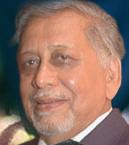
The demise of Dr. Indira Goswami alias Mamoni Roisam Goswami was a great loss to the world of letters. Mamoni was the lone writer from Assam who was known throughout India and abroad. She was acclaimed as most powerful writer by critic and common people of India alike. Once while visiting backwater of Kerala, the boatman who drove me around asked me if I belong to the land of Ms Goswami. Such was her reputation that even ordinary people of the country remembered her. To me Mamoni's best book was Dotal Hatir Uwe Khowa Hawoda (The Moth eaten Howdah of a Tusker). She was decorated with many awards. But most important were Jnanpth award, Principal prince Claus Laureate award beside Sahitya Akedami. I could not understand as to why Assam valley literary award could not be conferred on her despite her overwhelming popularity. I salute her for her spirit of humility, power of writing and concern for humanitarian cause.
She was a dear friend from our boyhood days. She was soft-spoken, shy but forthright person from her girlhood days. But she developed strong personality over the years. She was our contemporary in school and classmate in our Cotton college and Guwahati university days. We met each other when we were in class Eight. She started writing since then short stories under the guidance of Kirtinath Hazarika then editor of Natun Asomiya. In fact it was Tilak Hazarika and Kirtinath Hazarika who motivated us to write. I started writing poetry and Mamoni took to short stories. Sooner we realized that Mamoni was far too superior to all of us and she wrote some of the excellent short stories during 1956 and 1957. She wrote poems too. Once in Cotton College She wrote a stage play which was enacted by here all girls College mates as a rejoinder to male dominated College week cultural extravaganza. The drama was a thumping success in 1959. Once while visitng her Delhi House , I enquired:
“: Mamoni, what is the motivation behind your writing career?
: Writing was never my career. It was a passion. Teaching is my profession.
: What compels you to write really?
: My life. I write to enjoy my life. Without writing I would have been a dead Person! Almost all my books reflect my own experience of life.”
During our school days National Boys scout and Girls guide Jamboree was held in Jaipur. Both Mamoni and I were included in the Assam contingent along with few more fellow scouts and guides from all over Assam and Meghalaya under the leadership of Late Rameswar Kalita, a senior official from Scout and Guide movement.. During this journey we developed friendship from a mere acquaintance and it continued till today. Beside attending jamboree we were taken to various other cities of Northern India as a part of sight seeing. We went to luckhnow, Agra and Delhi. On return, I still remember, both of us wrote a few travel stories which were published in “Natun Asomiya” then edited by kirtinath Hazarika. Mamoni became a prolific writer there after, and wrote some of the trend setting stories of life that influenced Assamese society. She was the darling of youth and was blessed by senior for her humility. She moved up with great stories and reached pinnacle of success very early in life. We were proud of her.
The news of her death has devastated us. She has been a great writer, great humanitarian and devoted friends. She talked to me from Guwahati just two days before she fell ill this year and went into coma soon. I regret not visiting her in Delhi or at Guwahati. when she was in her senses. I pay my condolences and pray God for the peace of the departed soul.
She was also well known for her attempts to structure social change both through her writings and through her role as mediator between the banned secessionist group ULFA and the Government of India. Her involvement led to the formation of the People's Consultation Group, a peace committee. She used to refer herself as an "observer" of the ongoing peace process rather than a mediator or initiator.
Her work has been performed on stages and in celluloid. The film Adajya is based on her novel won international awards. Jhanu Barua made a film on her entitled "WORDS FROM THE MIST'. She was a member of the Girls Guide movements while in school. S
Mamoni Raisom Goswami slowly emerged as the Mamoni “bedew’ (elder sister) to thousands of Asomiya language readers. Her stint in Delhi University helped her to build up her reputation as a writer who read her scintillating works in translation. Amrita Pritam was her one of the best friends among others. Her departure from this world has left a void in the literary circle of the country that would be hard to fill. Though we knew She is gravely sick but never thought that she would depart so suddenly. Mamoni used love people. She would not disappoint any one who approaches here for an autograph. She encouraged young writers especially girls.
Mamoni was a Sitar player in her youth. The sight of her graceful walking along the M.C. Road, Guwahati with a Sitar on her hand is still fresh in my memory. She used to come over to the residence of Bharalis, next to our house, and accompanied Minati Bharali sometime who was also a co-Sitar player. Both learnt Sitar from Late Sunder Bordoloi at Kumar Bhaskar Natya Mandir at uzanbazar.
Mamoni was born into a privileged family and her early education was in Pine Mount, a premier English medium school in Shillong. Later She came to Guwahati and took admission in T. C. School. The headmistress of the school, Indira Devi was at first hesitant to admit her, coming from an English medium school. But soon mamoni proved how intelligent she was. She not only picked up the vernacular language but mastered it in such way that her teacher were awe struck. As Ranjita Biswas puts it “Ms Goswami writings focused on the suffering of the disadvantaged section of society. She understood the joy and pathos of the common people. Her novels and short stories reflected her empathy for them whether the setting of the plot was Kashmir, Uttar Pradesh or the green landscape of the Brahmaputra”.
She championed the cause of women throughout her career. Brought up in a conservative Brahmin family, Mamoni never compromised with the artificial diktat of the social norms, — be it while marrying someone out of the community, or in the way she wrote.
Mamoni always relished everything good in life. She loved good food, loved to attire well and was always well-groomed like French ladies. She was great in conversations and enjoyed the company of her friends always. Always mamoni had lot of time for her close friends. Mamoni loved Kolkata and used to visit often for lecture programme and for release of books. She is to write for “The Telegraphs” from time to time. Her latest writing was published as late as in November this year on Dr. Bhupen Hazarika’s death. The article must have been written 10 month before when she went into coma.
I feel her most of writing were great. But to me best novel of here were “Dotal Hatir Une Khowa Howda”> In that novel, she chronicles the saga of a young Brahmin widow Giribala who, since the death of her husband, had eaten only rice and boiled pulses and now shocks the society by eating meat surreptitiously.
The defiance of the protagonist Giribala, as she challenges the norms set by society for Brahmin widows in 19th century Assam is echoed again in Nilkonthi Braja depicting a much later period (the 1960s) in holy Vrindavan. In one of the earliest contemporary novels on the plight of widows in the religious circuit, it reflects on the suffering of thousands of Bengali widows living on the edge.
Mamoni’s stories reflect in the basic goodness of human beings, though it is constantly challenged by opposite forces. Her writing has a basic honesty, even when talking about herself. In the autobiographical Adha Lekha Dastavej (Life is no Bargain), she talks openly about her obsession, since she was young. Description of love making and sex was not a taboo in her writing.
Her reputation as a Ramayana scholar is well-known. Though she was in Delhi for a long stint as professor of Assamese literature in the Delhi University she never lost touch with her native land. A few years ago, going out of her literary world she took the initiative to try build a bridge between the outlawed ULFA faction and Assam’s administration to bring peace to the insurgent ridden land. Her heart was always in the well-being of the state. Her works have been widely translated into English and Bengali Languages.
With the demise of Mamoni Assam, nay Indian literature has lost a writer and humanist extraordinaire. I met Mamoni when I was young boy of 14 years; today I am Seventy years old. I had same admiration for her when she was also young. I have seen how strong willed persons she was in her life. I invoke the blessings of God for the peace of the departed soul. She has gone today but her writing would remind us her strength of mind. She possessed a beautiful mind. It always worked for the betterment of humanity.
------------------------------------------------------------------------------
Showing posts with label an obituary. Show all posts
Showing posts with label an obituary. Show all posts
Thursday, December 1, 2011

Friday, June 18, 2010
P.E.SHANKAR: A GIANT OF A JOURNALIST
P. E. Shankar was a Journalist per excellence working in Guwhati in early Fifties during the last century. When he landed in Guwhati to take charge of Reuter-PTI combined office of the News agency it was Lion Heart visionary of Assam RadhaGobinda Baruah requested his Assistant Editor of Assam Tribune to help him settling down in the town. Satish Chandra kakoti was the Assistant Editors then who received him at Gauhati on his arrival and helped him not only to settle down but to feel the pulse of Northeast and its culture. Both became great friends and their friendship lasted till Kakoti’s demise. Both the family maintained the family relations till today. Shankar died on 17th June 2010 at Chennai at the ripe old age of Ninty, leaving his two daughters and a son.
Shankar brought in the concept of News agency reporting into Assam . Assam Tribune and Natun Asomiya became one of the earliest customers of the Reuter- PTI combined. In early fifty the relationship between Reuter and PTI has broken down and PTI took over the entire operation in India. It is Shankar who presided over the smooth transfer news agency operation in Northeast.
“In September 1952, PTI ended the news-sharing arrangement. Reuters was suddenly left with just two correspondents and half a dozen stringers in India. Its heydays in this country were seemingly over”., according Naresh Rajkhowa who was journalist of Assam Tribune then.
Shankar was the Head of the newly formed PTI Bureax at Guwhati and tought the importance of “Objective Reporting” in modern India. Shankar became a wellkown face of Journalism in Assam. He took an office in M.C. Raod and it became a place of pilgrim for senior politicians of North East India. Then Congress office was in Happy villa, near PTI Office, and most of the front ranking leaders used to visit Reuters office including former Chief Ministers B. P. Chaliha, Devkanta Barooah and K. P. Tripathy whenever they visited Guwhati.during those days.
It was Shankar who trained up a few Assamese teleprinter operators , for a Journalistic career, like Pulin Bihari Barthakur, Kartick Kumar Baroowa, who became later years famous Journalist and Media Persons . Bartakur became Director of Government of India ‘s Information Department and Baroowa became head of Press Trust. Of India’s Bombay operation.
Shankar was not only respected by elder statesman of northeast and intellectuals of the region but was loved by even the children of Uzanbazar for his amiable behaviour, where he lived and worked. Dilip Kakoty, formerly Chairman of Higher secondary Board,( eldest son of S. C . kakoti )used to call him as “Reuter Mama” and we all his class mates and neighbour found it convenient to call him by the same name. We were in our teen’s then .At later years I joined PTI and learnt about his idiosyncrasies. He used to visit temple on the Bihu Days as it was also their “Bishu” the day of New Year. He used to distribute sweets to his staff on the occasion.
Shankar had left Guwhati to take over the charge of Tiruvantpuram office when P.M. Balan took over his place. Shankar retired from PTI in 1980 as the Head of the South India operation. His wife Parvati predeceased him . She was a great lady who brought up her to daughters Shanti and Jayanthi and only son Raja as responsible citizen. Shankar lived a full life and died on second week of June. Perhaps modern journalist of Assam might not have heard of him but older generation must be remembering his yeomen service to the Northeast. We salute to the noble soul and pray almighty to give strength to his children to bear the loss..
______________________
Subscribe to:
Posts (Atom)
Subscribe To


 Posts
All Comments